Controller Logic Architecture
Organising controller logic into clear operating modes—automatic, manual, and fault recovery—so transitions are predictable and each mode remains distinct.
Technical scope definitions, interface requirements, and commissioning procedures for industrial control systems, machine synchronization, and operator interfaces.
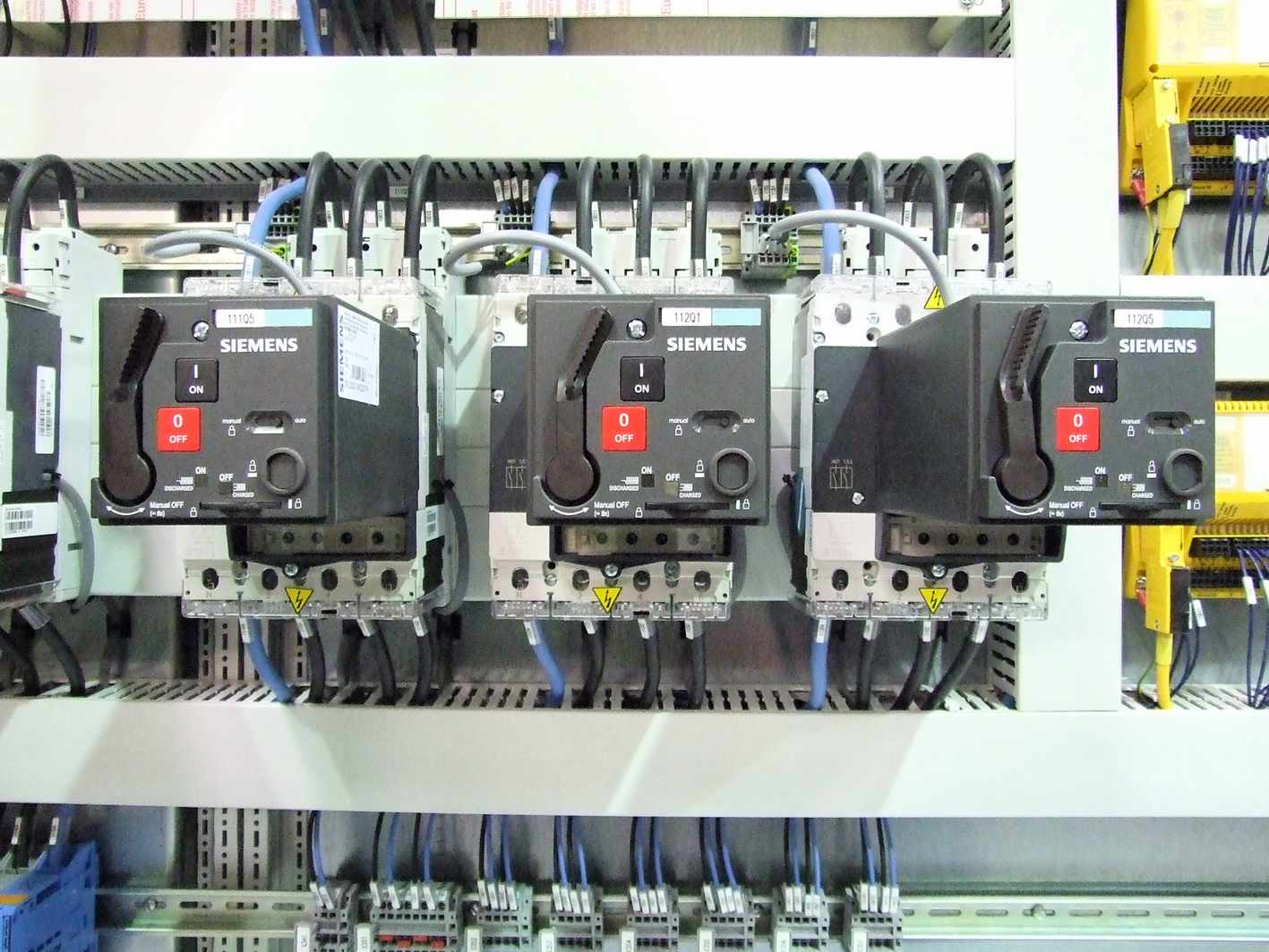
Hardware architectures and software logic for industrial machinery, production cells, and process skids.
Organising controller logic into clear operating modes—automatic, manual, and fault recovery—so transitions are predictable and each mode remains distinct.
Planning physical communication runs between main controllers, remote I/O drops, and field devices with clear IP addressing and cable routing.
Integrating hardware emergency-stop circuits, safety gate interlocks, light curtains, and safety controllers according to facility risk specifications.
Drafting complete multi-page electrical CAD schematics, power distribution sizing, component bills of materials, and terminal block labeling.
Coordinating signal handshakes and operational boundaries between separate machines and conveyor sections.
Setting ready-to-feed and ready-to-receive signals between separate machine controllers to coordinate product transfer and stops.
Configuring photo-eye sensors, variable frequency drives, and transfer diverters to pace product accumulation along transport conveyors.
Replacing obsolete controllers or worn relay panels while preserving usable mechanical actuators, motors, and field cabling.
Coordinating safety stop circuits across machine boundaries so that halting an individual work cell does not abruptly cause uncoordinated upstream stops.
Configuring operator touchscreens and diagnostic interfaces for daily production use.
Designing clear, uncluttered operator screens prioritizing current line state, active station status, and intuitive manual jog controls.
Structuring alarm lists with plain-language cause descriptions and field sensor cross-references to aid maintenance technicians during troubleshooting.
Providing password-protected interfaces for selecting pre-configured machine setup parameters for different product runs.
Displaying shift piece counts, cycle-time benchmarks, and active station indicators for real-time production monitoring.
Step-by-step checks before line signoff.
Software routines and communication handshakes are tested against simulated inputs prior to field installation to verify state transitions.
Checking each field connection end to end, testing sensors, confirming motor rotation, and validating safety circuits in stages during planned maintenance windows.
Final handover includes as-built electrical schematics, fully annotated controller backup files, and operational manuals for plant staff.